
Croptober
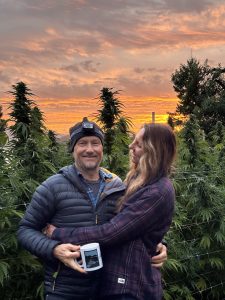 Since legalization our homestead is now known for its cannabis cultivation; which is fantastic because my sweet Craig grows amazing weed and some folks are interested in all things related to this epic annual herb. But before legalization, we were just an off the grid homestead couple raising our kids and ourselves in the wilderness. Our initial 20 acres (we now have 60) was a clean up piece, and everything that one sees now was created by us. The house, barn, sauna and gardens, but more importantly the water and electrical system. All of these systems were developed again by my sweet Craig, who provided food and shelter for his family, but also lights and running water. Our home has all the amenities and luxury of a house in the suburbs but it’s totally off the grid. That takes talent and tenacity (I remember when before the water lines to the house were buried and the night before had froze and Craig was out there with a blow torch heating the lines so the water would thaw and me and the girls could have a hot bath). This Alpenglow Farms was no farm, just a little homestead with a family learning how to live comfortably but alternatively from the norm. More so perhaps, we were learning how to live in nature by nature and eventually with nature. This means working with the environment you call home and in the mountains of Humboldt that usually equated to growing your own garden that included a cash crop. That cash crop was weed.
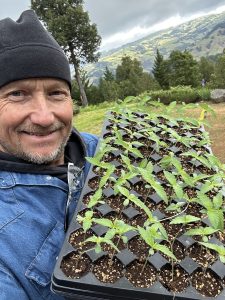
Harvesting all the different cannabis cultivars on the homestead is an extraordinary process, and takes months in the making. Two cycles of cover crops ready and replenish the soil over the winter and spring and seeds are started in March (Craig resonates with the biodynamic calendars so his timing is in tune with the stars and the moon). We get clones in April that are lovingly nurtured and strengthened before they are put in the Earth and when the month of May arrives, it’s game on in the gardens and our cash crop season begins. My list of personal perennial plants is long, and though Craig’s cultivars may vary from season to season, his list is also quite extensive. The 2025 cultivars at Alpenglow Farms is as follows; Guava Gift, Sour Diesel, Josephine OG, Pooches Papaya, Coyote Blue, Nepalese Watermelon, Motor Heads, Mad Fruit, Sprite, Jack Herer, Forbidden Blueprint, Satsuma Sherbert, Torjana, Blue Dream, and Super Tropical Cherry. I have a notebook that I keep all the years cultivars in because truth be told, I wouldn’t remember. It all looks like weed to me (not really, but kind-of) and as Craig is in the gardens everyday, his intimacy with his plants are at a totally different level. My joke is always “I just work here” which in a relationship that is both marital and business, that means ever changing roles and I have always danced in and out of the cannabis arena leading up to legalization. Everything changed then, and everyone’s role in Humboldt County either expanded or contracted, and those of us in the hills had to rethink and rebuild it all. What will this new and emerging industry do and what will it need from us?
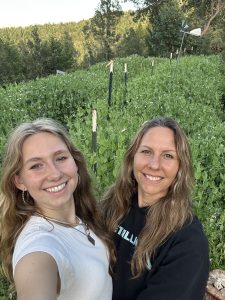
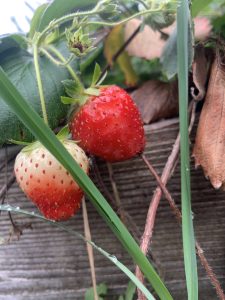
For many of us, October is known for a time of fallen leaves and fall harvests. This is of course subjective (what exactly you are growing) and dependent on your latitude location (northern or southern hemisphere). Some people can access the bounty of the earth all year, while some people’s seasons are shorter lived. Here on the homestead, October is quintessentially the end of our harvest season, as all the crops have been brought in and are being processed and stored away. We grow lots of wonderful things here in the mountains of Humboldt besides cannabis, and I thought it would be fun to add my garden list too because sometimes I forget all it is that is living among me and the trees. Lots of perennials for sure; lavender, roses, calendula, fennel, catnip, curry, oregano, thyme, lemon balm, lemon verbena, sage, rosemary, comfrey, blueberries, strawberries, pears, apples, plums, almonds, figs, marshmallow, and the wild nettle, mullein, purslane, evening primrose, St. Johns Wort, and yarrow. I still find potatoes and Jerusalem artichoke out and about when wandering the gardens, as we needed soil excavators to help naturally break up the hard dirt that formed during the logging era. So what annuals am I growing here too? Tomatoes, basil, cucumbers, kale, lettuces, watermelon, squash, pumpkins, beets, onions, garlic, and some years corn. All these wonderful garden delights are for pure love and fun and I sometimes let some veggies bolt because the flowers that arrive in the process bring so much delight to the bees and butterflies and our local farmers markets are abundant in all things seasonal and are grown by our local community with love, patience, and years of practice. Anyone that has ever grown anything knows how exciting and challenging it is to reap what one sows; it sounds so easy until you are the one outside in the early morning in your bathrobe and Bogs wondering what the heck just happened to your spinach and strawberries.
There’s always something to figure out, watch more closely, do again differently next time or; you are awestruck and stunned and you simply marvel at the most perfect head of lettuce ever created. One thing those of us still farming have in common is the love and gratitude for a successful harvest. Whether you are drying thyme, preserving blackberries, or hanging weed, a farmer is a farmer no matter how numerous (or scarce) the plants on the windowsill, front porch, or fields. Happy harvest y’all. Hope your 2025 season is as beautiful and bountiful as you.