Regulatory Waters
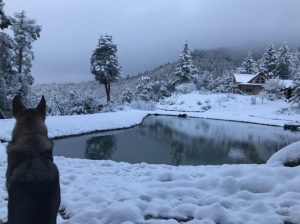
Last December (2023) Dan Mar from High Tide Permaculture designed and installed our rain catchment system. With all the buildings connected we now store 5,000 gallons of water for every inch of rain from our rooftops. Add that to the pond surface area and we are looking at about 10,000 gallons per inch of rain captured for our irrigation pond. This is a lot of water storage I know, but there’s a reason for that.
Water is needed to nourish the soil that in turn sustains the life force of plants. Farmers all around the world are dependent on mother nature and her rains to feed the earth; the watering of the plants during the actual rainfall but also to ramp up her reserves. Snow cap mountains melt and all that water feeds the springs, creeks, streams and rivers. Those of us who homestead in the mountains are dependent on those streams and springs for our bathing, drinking, and gardens. One of the tenants of land stewardship is taking from nature only what one needs. That of course has begged the question of how much is too much and who decides that amount exactly (that question has just as many answers to those asking).
Restrictions around water usage have been in play for decades. Most homesteaders in Humboldt County have voluntarily honored the forbearance period (the times during the year one abstains from pulling water from the creeks, springs, and rivers), as living off the grid and with nature is what draws people to live here. The pristine ecosystem is inspiring and those living within it do all they can to sustain it. But not all residents see this place as home and some extract resources from the land at such an extreme, they ruin it for themselves and those around them. The timber, fishing and cannabis industries in Humboldt may have sustained the economy, but sadly not the environment. It is crucial then that safe guards be set in place to ensure the thriving of this earth and all the beings in it. This conscious way of living applies not only to industry, but individuals alike.
Alpenglow Farms, i.e. my family’s homestead, holds a cannabis license with the state of California. Our homestead consists of 60 acres and our cannabis canopy size is roughly 10,000 square feet (this includes rows for walking and polyculture within the gardens that compliment biodiversity and the health of our land). If I did not hold a cannabis license, I could technically use all the water I wanted without having to answer to anyone (except my conscience and Mother Earth). But because we are cannabis farmers (I say cannabis, because not all farmers are held to the same scrutiny) my water is restricted; no water on my 60 acres can be used for cannabis. All water must come from our irrigation pond and our water storage tanks, and all water usage (including personal home use because I hold a cannabis license) is recorded and sent to the Department of Fish and Wildlife and the Water Resource Board.
I’m grateful there are agencies in place designed to protect the environment from degradation, as purposeful harm has been committed against the earth and the beings in it without much thought. Such harm is unfortunately still being done. But agencies also have agendas, and the legalization of cannabis has opened up work opportunities to countless entities outside of cannabis; the creation of regulatory enterprise and industry has ensued and the “grant rush” (coined by local Humboldt resident and community leader Dylan Mattole) rivals the “green rush” (think Gold Rush but with cannabis) in its extractive nature. True, government and environmental agencies are not harming the environment in the context of this story, but the hurdles and hoops set forth by these agencies have undeniably caused harm; mental, emotional and financial depletion of those of us left swimming who have survived the regulatory process.
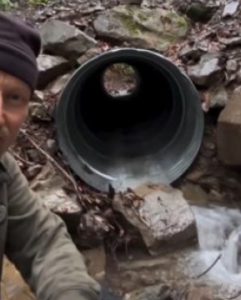
If our source of income has depended on cannabis for almost 30 years, and we are now required to meet every nuanced requirement set forth by the state and the county, how can we 1) find the time and bandwidth to figure out everything we need to do and complete it all by set deadlines while still working full time, and 2) pay for it all? We were successful business owners for years up until legalization, now we are fish out of water in an ocean we not only live, but created. With legalization, those of us hoping to keep our homes and livelihood had to pay to keep our self created and self sufficient existence. These tens of millions of dollars paid for lots of things, including agencies that give out grants which are now needed to upgrade homesteads that have sustainably grown cannabis on them for decades. We now ask for our own money back for all these upgrades; water tanks, irrigation systems for the pond, solar panels, culverts on roads with no car use etc…
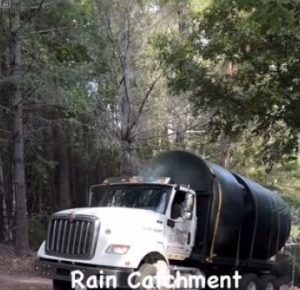
We are one of the very few who made it to the other side. The years since legalization have left many in this community bruised and weary to the bone. Lots of community members weren’t able to make it through legalization. This is why it would be amiss for me to not include this poignant piece of history and truth in this month’s blog. When you see our 20 plus year homestead thriving it comes from decades of hard work, perseverance, patience, and hope. Our ability to move through legalization is a result of tireless and endless work, phone calls, emails, supervisors meetings, and yes, grants. The gutter system that now brings the necessary water for our 10,000 square foot cannabis “farm” on our 60 acres was all paid for by a grant from California Fish and Wildlife (who stated Alpenglow Farms was the poster child for environmental stewardship and cannabis and asked us to be part of their marketing campaign), our friends at Cannabis for Conservation and Margro and Advisors. The beautiful gutters were installed by Streamline Seamless Gutters, and are a joy to see capturing water from the roof and filling the pond during the winter. This water will be used during the months of our growing season, thus sustaining the springs, creeks, and streams during the hot and dry summer and fall months.
We are grateful to be here on this land we love so dearly and we are grateful for the tenacity and drive of our spirits that continue to propel us forward during these exciting and challenging years. It’s been quite the ride and we are appreciative to both those within our community and those within the agencies that have supported us and our journey through cannabis legalization. It is our hope that the journey for those in the future will be softer and gentler and they too find success in all their beautiful homestead endeavors.