Wintering
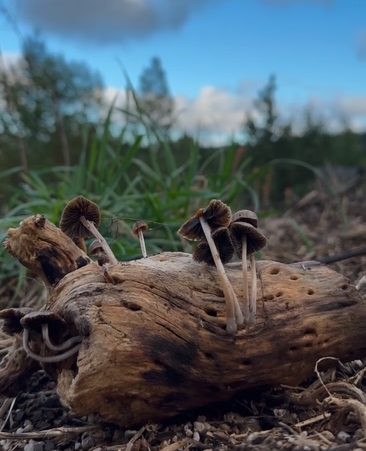
Wintering is a word I’ve been hearing a lot during this cold and rainy season. I don’t remember hearing it before, but I love it. I looked to see if there was a true definition of the word but all I could find was the basic definition of winter and references to Katherine May’s 2020 book “Wintering” which explains its meaning as reducing activity, conserving energy, and drawing on stored resources. All living beings exhibit this behavior during the winter season, but humans seem to have the hardest time surrendering to it. For most of us, life continues at a normal pace (despite our bodies and minds needing and wanting to slow down) and in some cases, life and our personal demands increase. I’m not sure of the time of the true New Year (which is dependent on Country location and latitude), but embarking on resolutions at the very beginning of the coldest and darkest time of year borders on absurd. Everything in nature switches gears during winter and lowers its level of intensity.
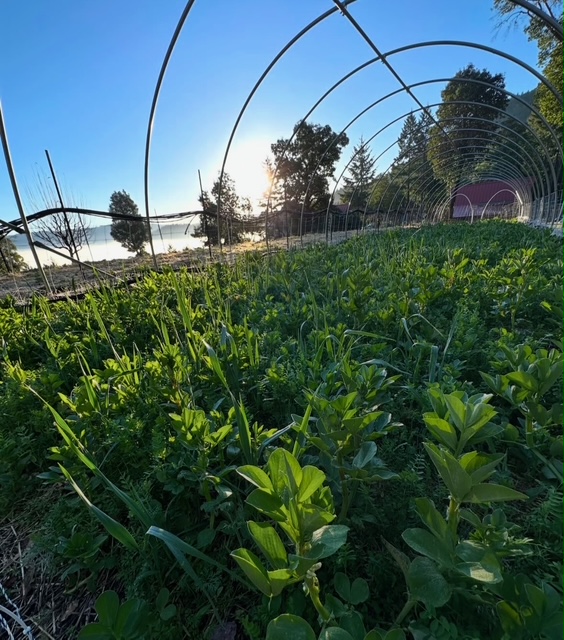
Living off the grid on our homestead for over two decades has given me a different sort of feel and respect for winter. The two seasons leading up to it are hot and dry, so the cold and rain are welcomed by my bones and spirit. Winter on the homestead also means our eight month intense work season slowly eases and our cultivated spaces on our land gets to rest. It’s neat to see plants doing what they love and what they are designed to do. They grow and bloom, and then slowly give themselves back to which they came. Annual or perennial, there is a cycle; a beginning and an ending, and one that can be witnessed by you. My herb gardens mosey themselves along all year without me doing much of anything (I LOVE a messy, wild, overgrown herb garden), while our cannabis and vegetables gardens are perfectly attuned and cared for in a disciplined way. When the season is over, we recharge the space and soil with beloved covercrops, giving thanks to the earth for her sustenance and life giving gifts. We give her deep nourishment and in return her spring soils are replenished.
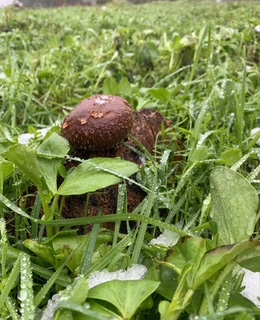
I know I need regeneration during this season, so I suspect the few square feet we cultivate on the homestead do too. Here at Alpenglow Farms, we have employed cover crops into our farming practices for over 10 years now. We use LeBallister’s 100% Organic Plowdown Mix which contains organic vetch, organic bell beans, organic winter peas, and organic barley. In the past we have used the blend with oats and rye ( I remember clover too, but clover is way too “social” with other spaces!), but we found it too challenging to terminate with our no-till practices; i.e. Craig’s crimping. I love sprinkling the cover crop over the earth, covering it with hay, and watching the bright green legumes pop up all joyful and proud. We love watching it grow, but we also love how it brings in the bees and hover flies and lady bugs.
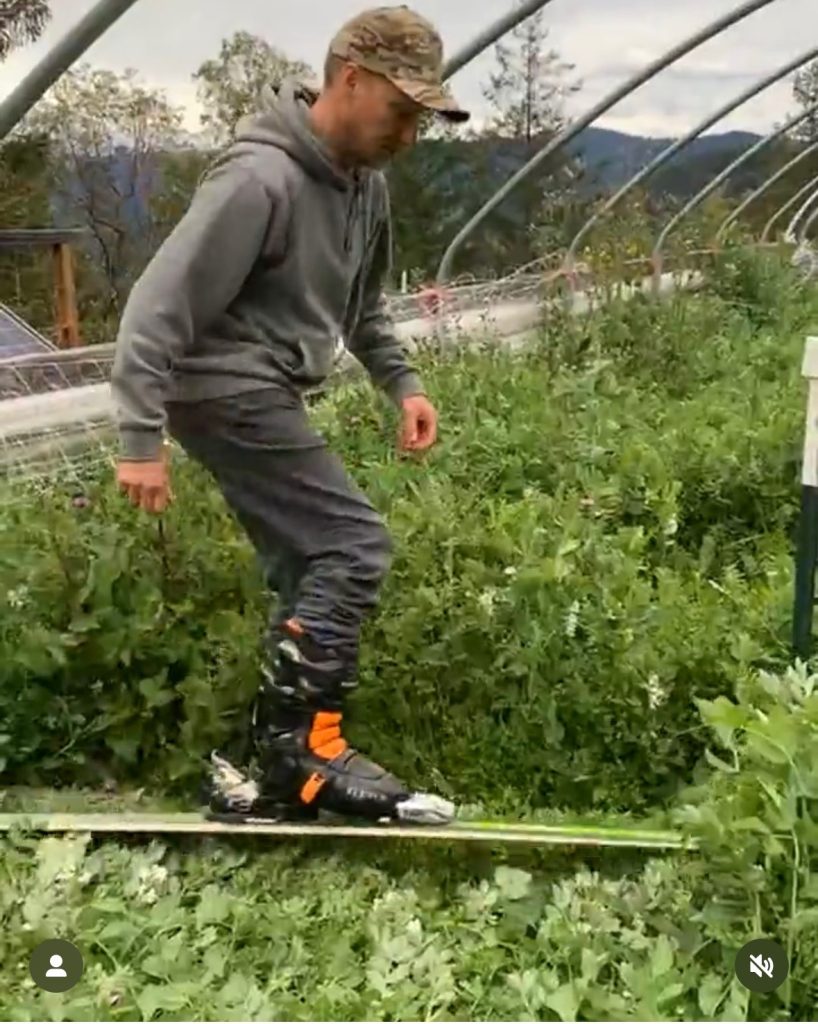
We let it grow until about knee and waist high, and then let the chickens have at it for a bit. A week or so later (after their feast) Craig crimps it down in his very stylish way. These little legumes have an important role in farming; they pull nitrogen out of the air and capture it in their root nodules, which form a bacteria called rhizobium that in turn feeds the soil.
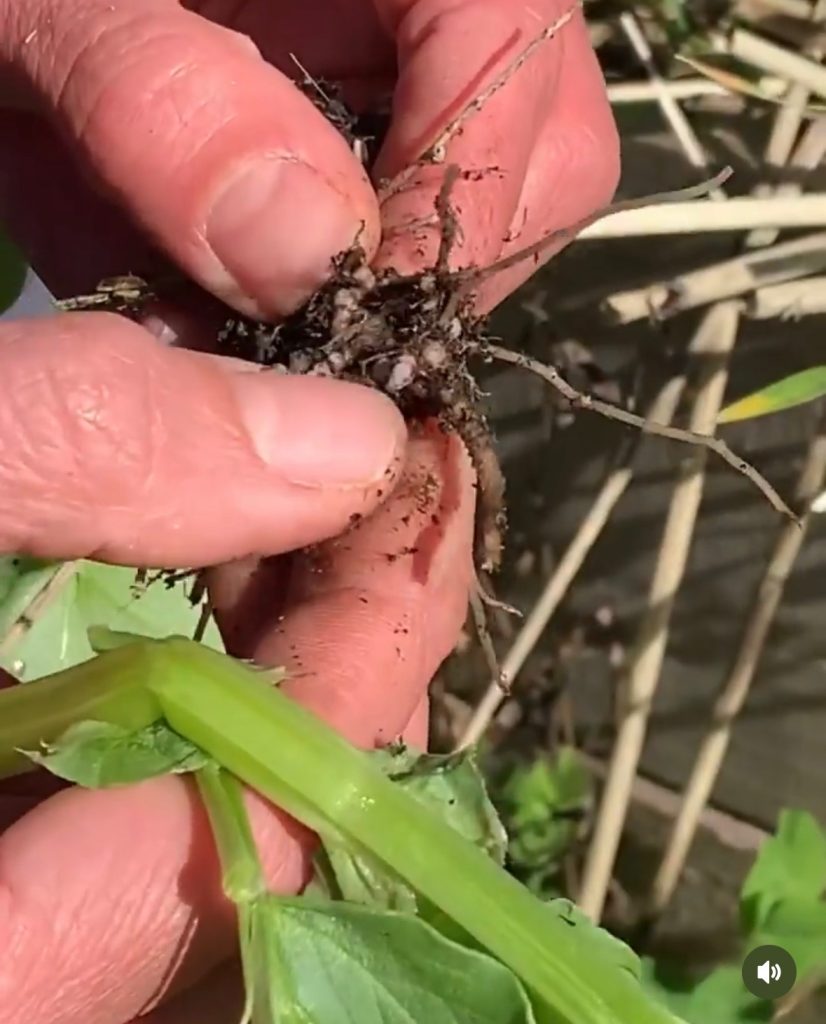
Cover crops are a great way to add nutrition to the soil while keeping the earth warm and cozy from the elements, and can be utilized any time of the year. Some people call cover crops “green manure” or “living mulch”, and as soil health is measured by how much organic material is present, cover crops are a great way to add nutrition and biology to your garden spaces. (To see and hear more from Melanie and her helper about cover crops, click the link!) https://www.youtube.com/watch?v=7y7GSuj816Y
Years ago when I returned to college after my children were in school, I went on a fantastic field trip with a retiring Biology professor (we were her last class after 40 some years teaching and though she had her PhD, she was returning back to the basics to become an Art Major!), where we explored a forest somewhere in Fortuna CA with a professor from Humboldt State. It was a lesson in biology, but also mediation and restoration, and I vividly remember asking the professor what would happen if we didn’t intervene, if we didn’t mediate the problem? He was so taken aback, which I could understand, as some peoples careers and future PhD’s are built around their proposed theories and very real hard work. But intuitively, I knew (and know) the Earth can nourish and heal herself without our help. The Earth knows what she needs, as do our minds, bodies, and spirits. Cover cropping, pruning, and “wintering” the gardens are clearly beneficial, but letting her winter the way she always has and always will, is a lesson in wintering we all could learn.